Posts

Knitting Socks with Circular Needles
Image
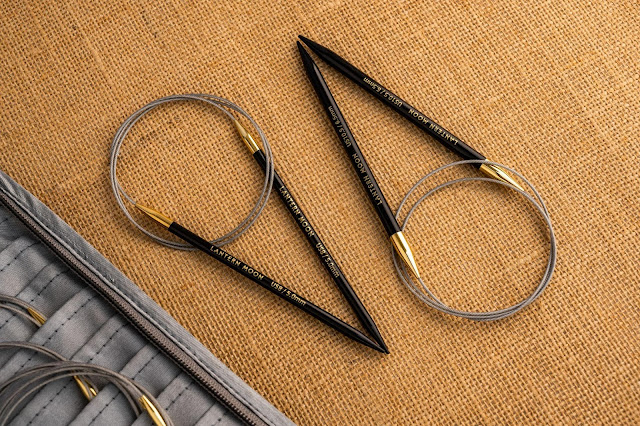
  Knitting a pair of socks is so much fun. Hand-knit socks are pure love for yourself or any loved one. The socks grow quickly on your knitting needles and even with a crochet hooks . You put your stash to good use in making a colorful pair of socks. There are thousands of great patterns on the web for hand-knitted socks but if you do not want to spend time browsing, you can easily make a pair on your own. Knitting socks with circular needles is perfect. The needles are designed for comfortable knitting in the round. You simply knit in rounds without having to worry about seaming the edges. So, let’s get started. Knitting Socks on Circular Knitting Needles To make socks on circular knitting needles there are many options. You could go ahead with any of the three methods below. It is also recommended that you keep a set of double-pointed knitting needles as you may need to switch the needle to knit with very few stitches. A sock pattern is the best way to start, even if you are ...

5 Tips to knit with Wooden Knitting Needles

Image
Knitting Needles are unique and diverse like the knitters themselves. The vibrant yarn community has people of all ages brought together by the love of yarn and creativity. Needles are available in a number of materials types and of course a range of sizes to create a variety of stitch sizes and knitted items. While different needles have unique characteristics, material selection is largely a matter of the personal taste of the knitter. To find the best needles for you, you'll need to experiment. Help is always available online and in the local community to explore the diversity of knitting. Many beginners start their knitting journey with a pair of needles borrowed from their knitting tutor or mentor. The most beginner-friendly range is definitely the wooden knitting needles , especially for young knitters. Wood has the advantage of being less slippery for yarn, making it easy to learn on, with no worries about dropping stitches. Even advanced knitters, who work with double-poi...

How to Weave in Yarn Ends in Knitting?

Image
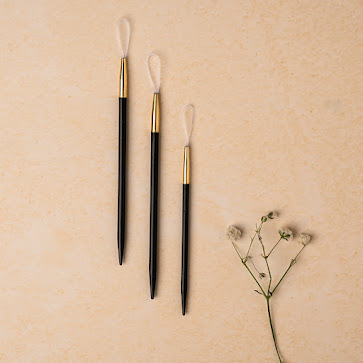
For the successful completion of any knitting project, it is absolutely necessary to weave in the yarn ends. The project is not finished after it’s off the knitting needles , but when it has no ends visible. Even the smallest project will have two ends to weave in, while the larger projects and one with multiple colors, will have many. Weaving in yarn ends serves two purposes. It keeps your stitches from unraveling and makes your knitting look as seamless and smooth as possible. There are many different ways to weave in ends and we all have our favorites.  In this blog, let’s look at some ways to weave yarn ends. Use a finishing needle Like its name the finishing needle is the most appropriate tool to finish a project seamlessly. Just like knitting needles come in different sizes so do finishing needles. Choose one that has an eye large enough to thread yarn, but also small enough to go through your stitches easily. It is recommended that you choose a size smaller than th...

How to use Double Pointed Needles for Circular Knitting?

Image
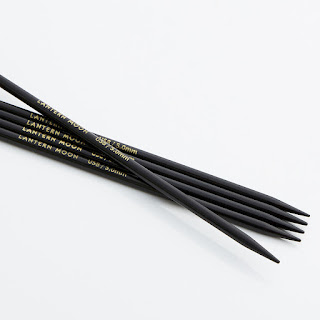
Circular knitting is the form of knitting of creating tubular projects such as socks, hats, sleeves of sweaters, etc. Double pointed needles (DPNs) are a practical choice for circular knitting. The needles have been used for knitting in the round for centuries and to date are preferred by knitters over others. Unlike single pointed needles that come in a pair, DPNs come in a set of four or five as these needles work together to knit in the round. The double points allow the knitter to work on both sides. They are particularly helpful for small-circumference projects, ones that cannot be worked on circular knitting needles. Like all knitting needles, they are available in standard US sizes and typical lengths of 4-8 inches to work on small projects such as fingers of gloves to large sleeves of sweaters, necks, etc. How are double-pointed needles used? When working with double-pointed needles there are three major steps Cast on: The basic step to cast stitches on a needle that ...